Athletes, Flexibility, Preparation, Stretching

Flexibility: A Benefit to Success

oversplit on chairWe all know that consistent and focused training is needed for the chance to be successful. Every sport or activity a person participates in, requires a series of different training exercises to develop the ability to achieve desired skills. This may include cardio training such as running, biking, swimming, etc, strength training, and skill training. But what is neglected in many sports and is equally as important, is the training in Flexibility. In this discussion, I will share my thoughts and experience on the importance of Flexibility and why it is should be a part of training in every sport.

In the gymnastics and dance industries there is a huge emphasis on flexibility in the development of the athletes. Many of these programs will have their competitive students follow a strict stretching session prior to every workout. Sometimes lasting between 30 and 60 minutes. They also may have a stretching session following every workout.

Dancer stretch  Why do these and other similar sports spend so much time with flexibility? Several reasons: for one, many of the skills required in these sports are judged on the their flexibility. For example, if a gymnast or dancer is performing a split leap, they are required to meet certain angle requirements. For the lower levels, a 45 degree angle is required. In the advanced levels, this may be 180 degrees. If the athlete falls short of these angle requirements, there is a deduction. In addition, flexibility is needed for the athletes to achieve certain skills. The front and back walk-overs are examples where flexibility is needed to accomplish these skills.

There are many people who are naturally flexible and don’t need to spend much time on stretching exercises. This is more of a genetic trait that people are born with. We have seen amazing body poses that showcase extreme flexibility. However, this is not the norm. Most people are not born with this trait and they need to work consistently to acquire the flexibility they desire.  Acquiring flexibility is a slow process and one that needs to be done at least on a weekly basis.  Athletes who do not work on their flexibility consistently will not gain the desired effect.

Although there are sports and arts that require flexibility in their industries, it plays a larger role in the over-all sports and activities realm. In any activity that entails some type of physical exertion, the participant should follow some type of stretching exercises prior to the workout. This area of training, however, is highly overlooked and not stressed as much as it should. The more physical the sport or activity, the more time should be spent on stretching all body parts. We see some stretching exercises being done in sports like football and baseball, but there should be a larger focus on this issue.


Why is stretching so important for the athlete? The most important reason is to prevent injury (Injuries: Prevention and Repair). One of the most common injuries in any sport are pulled muscles. When the athlete is exerting physical stress on the body, the chances of a pulled muscle increases. If the muscles become tight and stressed, they do not retain the same flexibility in movement which may result in a cramp or pulled muscle. If the stress is extreme, the injury may result in a torn muscle. This injury will prevent the athlete from continuing in the activity for a lengthy period of time and usually requires rehabilitation attention.

Man stretching   Stretching before every workout also allows the body to move more freely during exercise. This will allow the athlete to be more aggressive in their training sessions. Different sports have different areas of focus on what type of stretching exercise are required. Runners for example need to focus on the legs more than the upper body. This will include the calves, hamstrings, quads, and achilles. This also applies to other sports where running is the major type of exercise being performed. Other sports, like golf and baseball, will require a higher focus on stretching the torso and arms. Many athletes may have a personal trainer or coach that will assist them with the specific stretching exercises needed to enhance their performance (The Coach: Creating the Successful Athlete).

Once an injury has occurred, much of the rehab process involves stretching exercises. If an athlete has been casted due to an injury, the joints and joint tissues tighten up, the muscles atrophy, and scar tissue develops. Stretching the injured area dramatically helps to speed up the healing process. If this type of rehab is not followed, the athlete may have a slow recovery and have long-lasting effects including movement limitations and pain.

Yoga stretch 2

Activities such as Yoga and Pilates have become extremely successful throughout the world. Much of the exercises performed in these activities involve stretching all parts of the body. The positive effects that are reached in training these activities has resulted in their popularity. The benefits are many in developing a healthy lifestyle.

So why is flexibility neglected so often in the development of athletes? It may be that many simply do not think it is important to their development. Another reason may be that it is physically uncomfortable. To stretch properly, can be a painful experience. In sports where flexibility is a requirement, stretching exercises are performed to the point of extreme discomfort. Many coaches in these activities will assist the athlete in their stretching exercises. For example, an athlete who needs to learn the splits, the coach will actually push the athletes down to maximize the effect. This can be dangerous and should only be done by a professional and experienced coach. Overstretching can result in a torn muscle or even a worse injury.
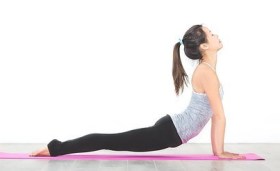
yoga-cat-stretch.jpg   There is a technique to stretching properly. The objective is to loosen up the body and prepare it for physical activity. This process is not a quick process. Each stretching exercise should last at a minimum of 20 to 30 seconds – more is better. In addition, the stretch should be done in a static manner. The athlete should not bounce or rock as the stretch is being performed.

There are many different types of stretches that can be performed. Many are sports specific and the focus may be on specific body parts. There are professionals in this area that have the knowledge of the types of stretches that will benefit each individual athlete. These are certainly Physical Therapists and Orthopedic doctors. In addition, coaches in such sports as gymnastics and dance have a great deal of knowledge of this as well.

As awareness in the health and wellness industries continues to grow in our societies, there is growing awareness and focus on preparing the body for positive and successful physical activities. Flexibility exercises certainly has grown in its popularity. It is a great benefit to the success of all athletes and activities.

I would love to hear your comments. Also, if there are any subjects you would like me to cover, let me know and I will do my best to post my thoughts.  Please Like and Share to all you believe will benefit from the information.

For clinics, seminars, or special events, please contact me at:  scottjohnsongymnastics@gmail.com       http://www.scottjohnsonstga.com

_TNG PNG Logo No Border

Athletes, Coaching, Mentor, Parent, Program Development

Someone Needs to be in Charge: Coaching Sports: Who is in Charge?

coach with kids

All athletes who participate in sports, whether it be for recreational or competitive purposes need to have the guidance and support of a coach. Many sports have multiple coaches that participate and specialize in particular elements of the sport. For example, in the sport of Golf, the athlete may have a swing coach, a putting coach, and exercise coach. Even recreational youth sports programs may have multiple coaches. Basketball, football, soccer, gymnastics, etc. will have several coaches on the field or in the gym. There should always be a head coach that is responsible for the entire program and assistant coaches that specialize in particular fields. This process can get cloudy, however. Throw in the parents and it becomes a nightmare. In this discussion, I will share my thoughts on the role of the coach and how it relates to the athlete.

In sports that have multiple coaches, there needs to be a definitive hierarchy of responsiblity. If this is not defined, the training atmosphere is sure to be chaotic with ongoing conflict. We have heard of the term “to many chef’s in the kitchen ” and it is no different in the sports industry. When this occurs, who suffers? the athletes!!

Not only is it an objective of the coaches to train the athletes so they can improve their skill level, they should create a positive and exciting environment for the students to train. This type of environment will certainly help to motivate the students to put forth a strong effort for success (The Motivation Factor). If there is conflict between the coaching staff, it will affect the atmosphere and focus of the athletes which may result in a lack of progress.

Coaches talking

The coach has a huge impact over the development of their students both physically and emotionally. Young athletes look up to their coach and seek direction from them. In many cases, the coach has a stronger impact over the student than their parents, as many athletes spend more time training in their sport than they spend at home. The coach has such a strong influence over the student that he or she will be the person who is responsible for the success or failure of the student. This is a huge responsibility and one that every coach should recognize.

There are many methods and styles of coaching and it can be a challenge for the coach to find what works best for each individual athlete. Every athlete is different and what may work great to motivate one student may not work well with another student. The challenge becomes greater when the coach is working with a group of students at one time. It would not be possible to communicate to each individual in detail during a training session. The instruction is directed to the entire group and all students must react and perform as directed. In this situation, all students need to accept the style of coaching presented to them.

Mean coach

So what style of communication should the coach use when working with students? There are many styles and each will have a different effect on each individual student. Some communicate in a stern and demanding manner, some use threats and negative consequences, while there are others who communicate with positive and constructive criticism (Coaching: The Communication Factor). I believe this last example should be the norm.

When an athlete is in an environment where there are several coaches training at once, there can often be confusion and conflict. The problem arises when different coaches are telling students different things on the same issue. For example, one coach may tell a student to run 10 laps while another tells that student to run 15 laps. This puts the student in a difficult situation. Which coach has priority in this case? It is this type of scenario that can cause a breakdown in productivity and positive environments.

Each coach participating in a program needs to have a specific set of objectives and be responsible for specific parts of training. Once defined, the coaches should not interfere in an area controlled by another coach. In the sport of gymnastics for example, there may be a coach responsible for training students on the Bars and Vault and a different coach responsible for the Floor and Balance Beam. Each will have their own set of objectives and training format for their students. This same concept applies to all sports that have multiple positions or events.

Parents on sidelines

A common problem in many sports, especially youth sports, are the parents. Of course, not only is the parent paying for their child to participate in the program, but they want their child to succeed. The problem arises when the parent takes it upon themselves to assist in the coaching of their child. There is nothing more frustrating for the coach then to have a parent try to coach their child from the sidelines (Coaching the Parents). This creates a huge disruption in the objectives the coaches are trying to achieve. It also distracts the student from focusing on what their coach is instructing. In this scenario, the student may be more concerned with what their parent is saying or thinking and ignoring what the coaches are saying.

Father yelling at coach

It is also common that a parent may approach the coach and attempt to dictate how their child should be coached. Are you kidding me?? Even if the parent has had experience in the sport, they have no business telling the coaches how to do their job. If the parent is not satisfied with how their child is being developed, it may be a good idea to terminate the participation and enroll in another program.

There are parents who may think the “grass is greener” at some other location or program and constantly moving their child. In gymnastics, we call this “gym hopping”. This only hurts the athlete and will usually slow down progress. It takes time for an athlete to thrive in an environment and gain confidence in their coaches. When students hop from program to program, this confidence is rarely accomplished.

group of coaches

It is the coaches job to train and guide the athletes along their path to succeed. The “head coach” needs to make sure all aspects of the training environment are organized. They need to perform as a team and insure the athletes are getting the best training possible. When there is a strong positive relationship among the coaching staff, the athletes will be in an environment that should produce positive results.

coaches teamwork

I would love to hear your comments on this subject. Also, if there are any subjects you would like me to cover, let me know and I will do my best to post my thoughts. Please Like and Share to all you believe will benefit from the information.

Athletes, Communication, Mentor, Success

Share Your Success

success silhouette words

When I was a young athlete with aspiring dreams of becoming successful in my future, I had always looked up to those athletes who have reached that success. I was motivated by them and wanted to be like them. It was even more special to meet a celebrity athlete in person. Some were very nice and welcoming but there were others who were not so nice and actually mean and rude.  What a blow that is to the aspiring athlete.  Young people need positives in their lives, especially in this very complex and crazy world we live in today.  In this post, I will share my thoughts on the importance of successful athletes presenting themselves in a positive and motivation nature and why they should Share Their Success.

flag-football coaches

All young athletes are excited to watch their favorite teams and sports hero’s on the television or at a game or event.  The young person may have aspirations to be just like their hero someday.  We, as coaches or parents, see this in our children and it is exciting to watch and feel their excitement.  These sports hero’s are considered celebrities in their sports field and they should have an obligation to share their success and stories to not only promote their sport, but to encourage the up and coming athletes who would like to reach the same success someday.

A common trap that success brings to a person is the trap of becoming arrogant.  It is very common and infects those that have reached a status of greatness.  The person may not even realize that this behavior has developed.  However, there are those that are well aware of their arrogance but do not care what people think.  This is very disappointing and a shame.  This type of person with this type of attitude can crush a young person’s idea of who they thought they were.  It is natural and deserved for a celebrity sports athlete to be proud of their accomplishments.  They not only have the right, but also a desire to showcase their success – but it should be done in a positive and welcoming manner.

Shadow of bridge

As a young athlete in the sport of gymnastics, I found success early in my competitive career.  In middle and high school, I was winning most of the competitions I participated in and developed a reputation of the one to beat.  I was gaining recognition throughout the schools and became popular.  I fell into the arrogance trap- and I had no idea I was acting that way.  One day in High School, my older brother approached me and said “you have become extremely stuck-up and you are losing most of your friends and I am one of them”.  Wow, that hit me hard!!  It truly was the slap in the face I needed to redirect my actions.  What is the world without friends and people to care about you?  I did not want to live that type of existence.  And no one should!!

From that moment on, I focused on treating people with respect.  If someone complimented me, I made it a point to always thank them.  I began to develop an attitude that it was a privilege to be successful and recognized for it.  I also was in a serious development stage in my gymnastics career and had my own hero’s I looked up to for motivation.  I had posters of the worlds best gymnasts pinned to my wall, most were USA Olympic Team members.  I looked up to those athletes on my wall and wanted to be just like them.  I had an opportunity to meet several of my hero’s in person while attending gymnastics competitions and my excitement was extreme.  All were very nice and took the time to say a few words.  This was priceless for me.


coach and athletes

As my success in sports continued to grow, the demands for my appearance became greater.  I was asked to participate in special clinics and camps.  I was hired as a motivational speaker to sports and professional groups.  It was important that I presented myself in a positive and welcoming manner.  I cared about what people thought of me and I wanted to do the best I could to inspire and motivate others.  Throughout my experiences, however, I have met other successful athletes, some with a high celebrity status, that had a disgusting sense of arrogance.  I would hear people comment on how disappointed they were in the person’s attitude.  Not only did this have an effect on me in hoping people don’t feel the same way about my behavior, but what is the likelihood that person would be invited back?

Having reached success in my career as an athlete, I make it a priority to mentor and help young athletes reach their own dreams of success.  It is great to see so many other successful athletes do their part in the same manner.  To be recognized as someone of importance is truly an honor and that person has an obligation to share their own stories of success with all that will listen.  Not all participants will reach success in sports, and the fact is that only a very small percentage will ever reach a high level of success.  But they all dream of it and they need to be encouraged and motivated.  The celebrity athlete can do that for them.  They need to Share their Success!!

20160828_162314.jpg