Athletes, Coaching, Communication, Competition, Evaluation, Parent, Skill Development, Training

A Parents Guide for Youth Sports : To Compete or Not Compete

multi sport collage

When a young student begins an activity, it is usually because they have a desire to do so. They may have friends that are doing the activity or seen it on television that sparks their interest. Whatever the reason, participation starts out at the beginning stages and the athlete will quickly decide if it is something they enjoy and want to pursue to higher levels.

Many sports are automatically competitive and is a major focus even for beginning students. Sports such as football, baseball, basketball, and soccer all have competitive games that are part of the participation. When a child participates in one of these types of sports, they become a competitor.

Some athletes thrive in this environment and love the competition. However, there are others who like the activity but not the competition. So, the question to consider is: “to compete or not compete?” This question is usually answered by the parent. Parents who enroll their child in a competitive sport should be aware of how the child reacts to this environment. Of course, competition is scary at first for a young athlete, so encouragement and patience may be necessary. Many parents will wait for a season to end before determining if that sport was the right decision.
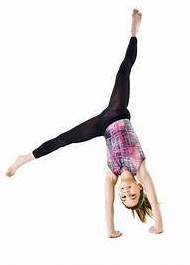
CartwheelThere are other sports that have a recreational only side of the sport where the students are not trained to compete. These include sports like gymnastics, dance, and golf to name only a few. Many children who participate in these types of sports do so for fun and enjoyment. The time commitment is typically less than in a competitive sport and there is little stress involved in participation.

It is typically the passion and desires of those athletes who choose to pursue the competitive side of sports. These athletes may have a natural competitive attitude. This drives them to stay motivated, train hard, and want to win. They are excited about spending as much time as they can practicing their sport. As with most competitive athletes, the objective is to train to win. There are many factors at play with competitive sports. These include learning great sportsmanship, learning how to lose gracefully, and more importantly, how to remain humble when success is achieved (Win or Lose: Sports Learning Curve).

The biggest difference between the athlete who enjoys the recreational side vs the competitive side of sport is the effort and dedication factors. Athletes who participate as a recreational activity will usually spend much less time at the activity. Training these athletes is also much different. Although, the students should still learn the skills correctly, effectively, and safely, there is no pressure to perform at any level. In this environment, training may not be focused on skill development detail as training with a competitive athlete.

The programs I operate are strictly recreational and the focus of our curriculum is centered mostly on tumbling elements – which is the foundation of all gymnastics. In addition, tumbling is an important part of cheerleading, dance, and martial arts. Thus, our programs draw in athletes from several different sports disciplines (Programs for the Rec Student).
Since our programs are strictly recreational and incorporates athletes from different disciplines, we have scenario’s where the students grow out of our program to pursue higher levels of sport. This is the dynamic of not offering a competitive program, however, we pride ourselves in developing students to the point where they can be accepted and take the sport to higher levels.

Coaches conference
Parents Need to be Educated

When a student is ready for this transition or the parent is interested in taking their child to the next level, it is important to explain the differences in the style of programs. Especially if the recreational program is not located in a gym that also has competitive program running simultaneously. When an experienced student makes the transition from a recreational program to pursue a competitive program, the training commitment and schedule will usually become much more demanding. In addition, there may also be a difference in skill development.

There are students who leave the recreational program to join a competitive program where they have thrived and become successful competitors. However, there are others who return or quit altogether because it wasn’t what they expected. There are several factors to consider when making this adjustment. Age is a big factor when considering this transition. Many students may be just too young to handle the structure and demand required in a competitive program. Another factor may be the sacrifice in the time commitment.

I always discuss with the parent when they ask about this transition the factors to consider (Coaching the Parents). Most importantly, if a student wants to give competition a try, I think they should experience the atmosphere. Most gyms will allow a trial period before a commitment is made. They will never know unless they try!!

kids on dance floor

I hope this article is helpful for those seeking information for youth sports development.  I will soon be releasing a series of manuals and video’s that will be beneficial for many.  These will include skill development, safety and spotting, program development, training atmospheres, and many more subjects to enhance the development of coaches and athletes.

If you have concerns or need assistance with your training program, do not hesitate to contact me.  If you would like an on-line training session via Skype, please contact me for scheduling.

Email:   scottjohnsongymnastics@gmail.com

Athletes, Coaching, Skill Development, Uncategorized

An Approach to the Struggling Student: Coaching the Challenged Athlete

coach with athlete

The objective of the coach is to train their athletes to improve their abilities and performance level. For many coaches, and programs, this objective becomes extreme. It becomes an objective to not just improve the athlete but to create champions. But what about the athlete who doesn’t have what it takes to succeed in the sport? Are they tossed aside – forgotten, humiliated? This discussion will focus on training and developing the hopeful and challenged athlete.

All coaches have experienced the student who is very motivated and has a lot of determination, but unfortunately, struggles with learning even the most basic elements. Every person is built differently both physically and mentally. Many sports dictate what type of person is made to succeed in that sport. For example, to excel as a basketball player, the person will usually need to be tall; to excel in gymnastics, the person usually will be smaller and lighter. There are always exceptions to this dynamic but true in most cases. Thus, genetics play a major role in how successful one may be at sports.

The challenge many programs have is how to handle those students that will not progress to the point of becoming a competitive athlete. This is a sensitive issue and should be recognized so as not to damage a student’s confidence and self-esteem. Although in many cases, it is the parent who is pushing the issue of success without realizing the limitations their child may have. In these cases, parents will leave and explore other gym programs in an attempt to find the miracle program that will develop their child.

the-olympic-rings

Many of these situations are students in recreational class programs (Programs for the Rec Student). All young athletes aspire to be champions one day. They have their own dreams of wanting to be just like their idols. I have had students state how they want to be in the Olympics someday – and they are serious!! And the coach should never tell the child that this is most likely an impossibility. No matter how awkward a student may be, they should never be treated any differently from the other students (Coaching: Lets Be Positive).

There will usually be a point in time when the student will realize their true potential. When they see some of their classmates moving up to higher levels, they wonder why they cannot move up as well. This is where the coaches need to communicate to the student and parent, in as positive manner as possible, that there are skill requirements that must be met to move to the next level. They need to be told what skills need to be accomplished and what they can do to meet those goals.

We want every participant to feel good about their sport experience. Even though a small percentage of athletes ever reach a highly competitive level, the skills and training they acquired will benefit them in other activities they choose to participate in.

As a gymnastics and tumbling coach, I have many students participate in our class program with aspirations to become great at the sport. All students are treated the same and follow the same curriculum of the other students at their same level. For the students that are struggling, the parent will usually approach me and ask to discuss their child’s progress. This is a great opportunity to explain the dynamics of the sport and the challenges facing the student (Coaching the Parents).

FB_IMG_1463877237222.jpg

We want every child to have a great experience with their participation. It is important that children have hopes and dreams and set high goals for themselves. We should always support and encourage this attitude. It’s not all about winning or losing or becoming a champion. It is participation that is important to recognize. Every student should be regarded special and treated like a champion!!


Athletes, Communication, Stress, Success

The Stress and Emotional Turmoil on Elite Athletes: The Psychological Effect in Sports


FB_IMG_1525040464985.jpg

It is exciting to see young children having desires to become someone great when they grow up. They have their sports idols and hero’s, and they want to be like them someday. It is a dream for young children, and although most grow out of that dream as they age, many others stick with it and have an opportunity to reach that dream. And how exciting it is to achieve a childhood dream. However, there are many consequences when someone reaches success. Many of these consequences are positive and exciting, but there are others that are negative and can be devastating.

For an athlete to reach the highest levels in their sport, training and commitment becomes very intense. Not only is it a great commitment on part of the athlete, but for the coaches as well. The psychological effects can be intense and can last throughout their career.

When a high-level status is achieved, the athlete should feel a great sense of success. It has usually taken many years of hard work to reach that status and only a very few ever get that far in their career. But what is hidden from the public in many cases is the untold stories of how these athletes achieved their success.

lacrosse-winner     We see great athletes perform at the highest levels, such as professional sports and the Olympic Games. We see their triumphs and excitement when success is achieved, and we also see the disappointments when success is not achieved. It truly is an emotional roller coaster for the athletes.

Reaching the pinnacle of success has its challenges and they can come from many different sources. We see it not only in athletics, but in other industries as well – entertainment and business for example.  No matter the industry, all people in the pursuit of success and achievement will have barriers to cross and stress to overcome.  Each individual has developed their own means of dealing with this stress, and it is imperative it is dealt with in a positive way as to eliminate or control its effect (Stress in Sports).

Stress anim

When success is achieved, there becomes a high level of expectancy to maintain that success. It may come from the parent, coach, friend, media and more. This expectancy increases stress levels that can have lifelong effects.  An athlete will not always win and the emotional effects when the “win” does not occur can be difficult for some to manage, especially if there are extreme external pressures to succeed.

There is much talk in the sports industry recently about how athletes are treated in their training environments. The United States Olympic Committee and related Sports Governing Bodies have increased their awareness and policies for Athlete Safety. This pertains to both physical and emotional issues. Coaches are being held accountable, now more than ever, for the mistreatment of athletes.

While there is a program in place to regulate coach’s behavior in amateur sports, there is not one in place for many of the youth sporting leagues. This may include youth football, baseball, soccer, and more. Many of the coaches volunteer their services and are often a parent of a participant. While there are some basic rules and guidelines, there are no consequences in the event of poor treatment of the students (Respect in Sports). In these environments, the parent plays a key role in whether the atmosphere in training and competition is positive or negative.

Failure Depression pic       I have not only heard of tragic stories of abuse but have seen it occur throughout my years as a competitive athlete. Emotional abuse is the most common and has the longest lasting effect. There are many athletes who have developed serious eating disorders due to the demands and abuse by coaches. Many gyms have their students weigh-in each day and are required to maintain a particular weight (in my opinion, this should be eliminated in all programs). I’ve heard stories of coaches calling students “fat” among other negative comments. These athletes are typically young, and these comments and style of treatment are devastating!! Other comments I have heard are “worthless”, “loser”, and “lazy”. This is all bad!!  Not only does this behavior destroy a young person’s self-esteem, but it may become a horrible memory their entire life.

Another factor that has been notorious in crushing the emotions of athletes is the media. The media is certainly a “double-edged sword”. It is needed and extremely instrumental in building awareness and assisting in the successful development of athletes. It is the media that catapults a person to national and international recognition. It has made many people wealthy due to this recognition. In many cases, people and companies depend on the media for success.

sports reporter

However, it is unbelievable how these reporters can be so cruel at times. We have seen how the media will depict an athlete or team for success and raise their status to guaranteed success – all prior to a scheduled event. This is great for the athlete or team in building support, but at the same time, increases stress for public expectations.

We have seen Olympic athletes promoted by the media prior to the competitive event as a sure “Win”. They put the athlete on a pedestal for expected success. Then, if the athlete does not meet those expectations the tables turn and then viewed as a great disappointment by the media and other social outlets. It is clear that many in the media world do not completely understand all the factors that go into play when considering ultimate success. And it is also clear that the media (in many cases) does not care about a person’s emotional state or consequences.

I have personally experienced great support from the media and I am truly grateful for that support. However, even though it has rarely happened, I have also experienced negative support from the media. Negative circumstances in one’s life has a much stronger and longer impact than positive circumstances.

This is why there is such a strong movement in the sports arena to improve the environment that athletes participate and grow in. Success is very difficult to achieve, and the pressures are extreme. Each athlete is aware of these pressures and most are self-inflicted and motivated. It is the external pressures that we need to consider and approach in a sensitive manner.

soccer high fives

I have always believed that champions can be created in a fun, positive, and exciting environment. I know, I lived it. It breaks my heart to hear the tragic stories of those who suffered many years in poor controlled and negative environments. Just one example of many is the recent story published about Katelyn Ohashi.  A true champion that was able to find her own path but not without years of turmoil as a young athlete.

It is our job as coaches, parents, and friends to support and nurture our students and children as they pursue their dreams and goals. For when they succeed, we also succeed. And when they fail we need to be there to pick them up and help regain their confidence.

success silhouette words

Athletes, Health, Lifestyle

The Retired Athlete: A Story of Fit to Flab to Fit: Back to a Healthy Lifestyle

Whether your an athlete or just someone who likes to stay healthy and in shape, it takes time and effort to reach results you strive to achieve. For some, this comes easy. For example, athletes, both recreational and competitive, have a training schedule that is usually consistent enough to reach and maintain that healthy lifestyle. However, for others, it may be a great challenge to reach the healthy objectives they desire. Many people live an unhealthy lifestyle: not eating the proper foods, overeating, not exercising regularly, etc. Even genetics play a role in this scenario. Some people are born with a high metabolism and some with lower metabolisms. There are other factors such as medical issues that play a role in someone’s quest to a healthy lifestyle.

Continue reading “The Retired Athlete: A Story of Fit to Flab to Fit: Back to a Healthy Lifestyle”

Athletes, Coaching, Evaluation, Training

Student Evaluations: Where to Place New Student Athletes

20180509_163503.jpg

There are many sports that place their athletes in particular groups based on the age of the student. We see this in sports such as football, baseball, and other such team related sports. This is to ensure an even playing field among the athletes. However, there are other sports where placement of the students is based on experience and skill level. This is common in sports like gymnastics, cheerleading, and dance. It is important to evaluate and place new students in the appropriate level so they can be in an environment that can maximize their potential.

youth football team

Proper placement for students in any group setting is a critical issue that needs to be considered. There are a number of factors that should be recognized in placement practices. Most importantly is the social environment created in group settings. It is this reason that most sports use age as the criteria for placement. Grade levels in most school systems are based on age. People at all ages tend to feel most comfortable with other people in their age range. For example, it can be extremely awkward for a teenager to be placed in a group of 5 and 6 year olds. It is the same for adults as well. Although an adult usually has the maturity to adjust to almost any environment, it still may be somewhat awkward if the age range is extremely different.

Children are very vulnerable to their social environment and it should be a major objective for the coaches and parents to ensure the child is placed in an environment where they will feel comfortable and thrive. In the sports of gymnastics, cheer, and dance, this scenario becomes challenging at times. If the student has little or no prior experience in the sport, they would certainly be considered a beginner. In many programs, beginner students are much younger, usually falling in the 5 to 7 year old age range. Students of these ages usually will get along well together in a group environment. As the students progress, they may be moved up to the next level. This mobility is relative to the ages participating at each developmental level. However, as sports increase in skill levels, the age ranges tend to expand and this can be a challenge for many programs.

FB_IMG_1521642684854.jpg

A common scenario is when a student categorized as a preschooler, for example 3 or 4 year olds, that has excelled to a higher level than what is structured for that age group. In this case, the student should be place in a higher level group so they can maximize their growth and ability. Although this placement may become necessary, it places the student in a group of students much older. When we place a 4-year-old in a group of students that are 6 to 8 years old, it may create a strong feeling of anxiety for the student.  In addition, skill levels may be much different than the maturity levels within a group.

This situation occurred in my program recently.  We have a 5-year-old student who has developed quickly and needs to be challenged at a higher level.  We placed this student in the next level up, however, the students where much older.  This was a disaster!!  The 5-year-old was so intimidated being among (giants) that she completely lost all interest in the class and sat out.  We determined it is best to move her back to her original class and the coaches will work her at a higher skill level.  Upon maturity, she will grow and be able to handle an older age division.

In addition, not only is the maturity level a huge difference, the social environment and attitudes are also different. Topics of discussion are very different among different age groups and the coaching staff needs to make sure that any discussion is appropriate, especially for the younger students in class (although there should not be much discussion among the students while in class:)

cheerleading group with young one   In the sport of cheerleading, it is very common to have a large range of ages among participants within a same squad. Due to the dynamics of this sport, students that are the “fliers” are, in many cases, smaller and much younger than the other students on the squad. We often see young elementary age students on the same team as middle school students. The age ranges can be as much as 5 or more years difference. Many people may wonder if this is appropriate. It certainly may not be a positive or appropriate environment for an 8-year-old to interact with a group of teenagers. This is where the coaching staff is challenged. Although it is difficult to monitor, the coaches should communicate to the students that conversations be limited to protect the younger students from inappropriate influences.

Another challenge that is common in most programs is when an older student with little or no experience needs to be placed in a beginner class. As mentioned earlier, most beginner students are early elementary school age. When we get a teenager wanting to learn gymnastics, it certainly can be an awkward situation to place them in a group of such young children. It may not only be awkward for the older student but also for the younger ones as well. So, what can be done? Possibly, through a trial class to see how the dynamics work in this situation. In many cases, it works out fine. In other cases, it is usually the older student who feels the most uncomfortable. One option is to offer private lessons to the older student to get them to a level where they can be placed with older students.

Some programs are large enough to have classes based on ages. For example, a program may offer classes for middle and high school students. Although, the ability and experience levels may be drastically different, the dynamics and environment are more positive for the students.

parent conference animWhat are the criteria for student placement in a program? All gyms are different in regard to their structure and class curriculum. When a new student is interested in signing up, it is important that the student is evaluated. We do this by communicating to the parent some general questions regarding skill level. For example, we may ask if the student has had experience and for how long. Questions should also be asked in regard to specific skills: can they do a great cartwheel or round-off? However, it is important to not allow the parent to dictate where a student should be placed (Coaching the Parents). We see this scenario often. Some parents may say their child is at a certain level or able to do particular skill, but when they participate in the class for the first time, the story is completely different.

I great way to evaluate the student is to offer a free trial class. Through initial conversation with the parent, the coach will have an idea of what may be the best level to start. It is better to place a student in a group for their trial class that may be under their ability level. This is to protect the student from embarrassment. I have seen students placed in a higher level than their own ability for a trail class that has resulted in embarrassment and humiliation. Sometimes to the point where they won’t come back. It is important to try to create a positive and exciting environment for all new students.

Evaluations are an important element to the success of every program.  All students are different in many ways and should be placed in a system where they can thrive and have a great experience.  A trial class or trial period is essential for the coaching staff to determine what is best for the child and the overall program.  Most importantly, the coaching staff needs to make the final decision of where the student needs to be placed.  In the proper environment, students will have a much greater chance to grow and achieve success.

showcase medal ceremony