


There are many factors that go into creating a successful program and successful athletes. Some of these factors include proper staffing, proper equipment, great management and communication skills as well as many more which will be discussed in future posts. In this discussion, I will be focusing on the importance of Class Structure as it relates to recreational programs.
Depending on the type of gym, whether it is a gymnastics, cheer, dance, or other, the class structures may be quite diverse. There are classes for each skill level, classes for different age groups, classes for rec students, classes for competitive students, and many more types of classes that are needed to meet the community’s needs and help the gym grow. Thus, class structures must be well-defined and can get quite extensive.

All gym owners and program directors have their own opinions and views of how they should structure their class programs. There is a lot of information out there regarding this subject and it can be very diverse in application. What this means is that there is no “set in stone” structure or system that will guarantee positive results. Every program is different and program objectives may be different. So, the class structures in each program must be designed to meet the goals and objectives of the gym.

However, there are a few guidelines that, I believe, are essential in setting up the class structure. Most recreational programs have a class time of approximately 55 minutes. Preschool classes are usually a shorter time frame as these little ones have such a short attention span (some have zero:) Through my years of working these rec classes, I have found that the structure must me laid out so the students are engaged and working productively throughout the entire class time. To accomplish this, there are several issues to consider.

Have you ever heard of a scenario where the parents, who are observing the class, watch the clock closely and even take notes on how often their child takes a turn on a piece of equipment? I have heard this issue for many years and have found that this one issue plays a major role in the retention of students. Why does this happen? There are a number of issues that contribute to this problem: too many students per class, not enough stations, lack of traffic control, inexperienced coaches. Each of these factors can be fixed to ensure the class program’s success.
As a gym owner, we all want to maximize the number of students in our programs in order to maximize the revenue. Although this is a critical issue, it is important to weigh the financial picture with the quality picture. Today, there are many activity options where parents can enroll their children. We have all heard of “gym hoppers” where some parents always think the grass is greener at another location. This is not usually the case, but has some merit if a program is not meeting the parent’s quality expectations.
Parents are consumers just like you and I. When they pay for something, whether it’s a product or a service, they are going to have both real and perceived expectations. Hence, if they don’t see a positive return for what they are paying for, you may very well lose the student.
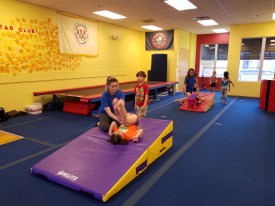
I believe it is very difficult for one coach to run a class of more than 8 or 9 students. Even with numerous stations set up for the class, the instructor would have a hard time watching all the students and making the proper corrections throughout the class. Class sizes that exceed this number should have an additional coach. As I discussed in a previous post (Coaching: The Communication Factor), it is important that the instructor communicates on a consistent basis so the students always understand the skill development corrections they are given. In addition to this being a quality issue, it is also a safety issue. Each child, especially the younger student’s, need to be watched closely throughout the class period. While the class is being run, the instructor must be placed in a position where all the students can be seen. No student should be working at a station where the coach cannot see them.
A 55 minute class can fly by in flash, so the class should be structured in accordance to time frames. Always start the class on time- this is critical!! The stretch should have a time limit, each skill being worked or station rotation should have a time limit. If the clock is being monitored closely, the students should be able to work through the 55 minute curriculum and accomplish the program effectively.

A successful program is one that develops the students in a progressive manner in all levels of participation. This requires that each instructor of every class is trained and has the knowledge and experience to run a successful class. If parents are not seeing any progress over a period of time, they will seek other programs or activities for their children. With this being said, however, not every student is made for the type of program you are offering and may not progress regardless of the structure being offered. All we can do is provide 100% effort to insure the students get the best possible instruction.
Change should always be considered as well. Program objectives may change, student dynamics may change, etc. In every case, class structures should stay up to date with these changes. I personally have gone through many structure scenarios to find the perfect fit for my program objectives. I do my best to stick with a consistent program so the students can progress and accomplish their skills as quickly as possible. I will cover the subject of class curriculum in another post.
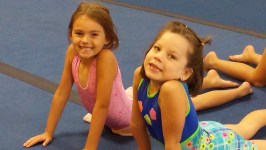
Remember, if the program is a positive program with positive instructors and an exciting and positive environment, the participants will be more likely to love what they are doing and have the motivation to move forward in their development.
I would love to hear your feedback on this issue and answer any questions you may have. You can contact me through this post, or FB, Twitter, or my email at: scottjohnsongymnastics@gmail.com
Be sure to like this post and share to all you believe will benefit from its content. There will be lots more to follow!!


 How often do you see children doing cartwheels out in public, whether it’s at the park, front yards, at the beach, or even the grocery stores? They are being done everywhere, you even see it often on television commercials!! Why? Because it is fun!!

 Most of gymnastics is based on tumbling. Flipping and twisting is used on most all apparatus in gymnastics and the foundation of these skills are primarily learned on the floor. This is how I started my gymnastics career and it evolved into the whole gymnastics experience. As I discussed in an earlier blog (Tumbling: Importance of Building a Strong Foundation), it is at the beginning levels that these skills are learned properly and safely so the student can progress in a positive manner.
 In the sport of cheerleading (and this is a sport), tumbling is major requirement. At the lower levels, the skills are basic: such as forward and back rolls, cartwheels, and back walkovers. At the higher levels, the requirement is much more advanced. Participants are required to do skills like back handsprings, jumps to back handsprings, front handsprings, back flips, and even more difficult skills. In the sport of dance, tumbling is also becoming more of a requirement. In this sports discipline, the skill requirements are centered more around front and back walkovers, and side and front aerials. Due to this demand, many of the coaches in these sports are forced to train their athletes for the required skills. However, the concern is that many of these coaches do not have the experience and knowledge to teach these skills.
 I have given many tumbling clinics to teach the proper techniques, drills, spotting and safety to coaches in the gymnastics, cheer, and dance industries. Most of my discussions are based on the beginning and intermediate skill levels as this is the majority of the markets needs. If the students learn in a safe and progressive environment, they will be more inclined and motivated to reach higher levels.

 As a coach myself, and one who has been involved with sports most my life, I would love to see all children get involved with some type of sport activity. When I started my first tumbling business, both my sons attended the classes and they thoroughly enjoyed the experience. Since my program was strictly recreational, there was no pressure to succeed to any level. Besides, my boys didn’t listen to me anyway:) Does this sound familiar to any of you?
 We can’t expect young children to know exactly what they want to do and prepare for their future. They all have dreams, but reality isn’t part of their ability. For this reason, the parents are in control of what their children do and what activities they will be involved with. The more activities, the better.
 I have seen many instances where a parent puts their child in an activity that is obviously not what the child prefers and actually sets the goals for that child to achieve. The reality is, the child will not likely achieve the expectations of that parent and may wind up hating the activity due to the lack of success. Coaches and instructors should never tell a parent how to raise their child and dictate what should be done, however, it is our responsibility to educate the parents on our industry and make suggestions that are positive and constructive for the future development of their child.


